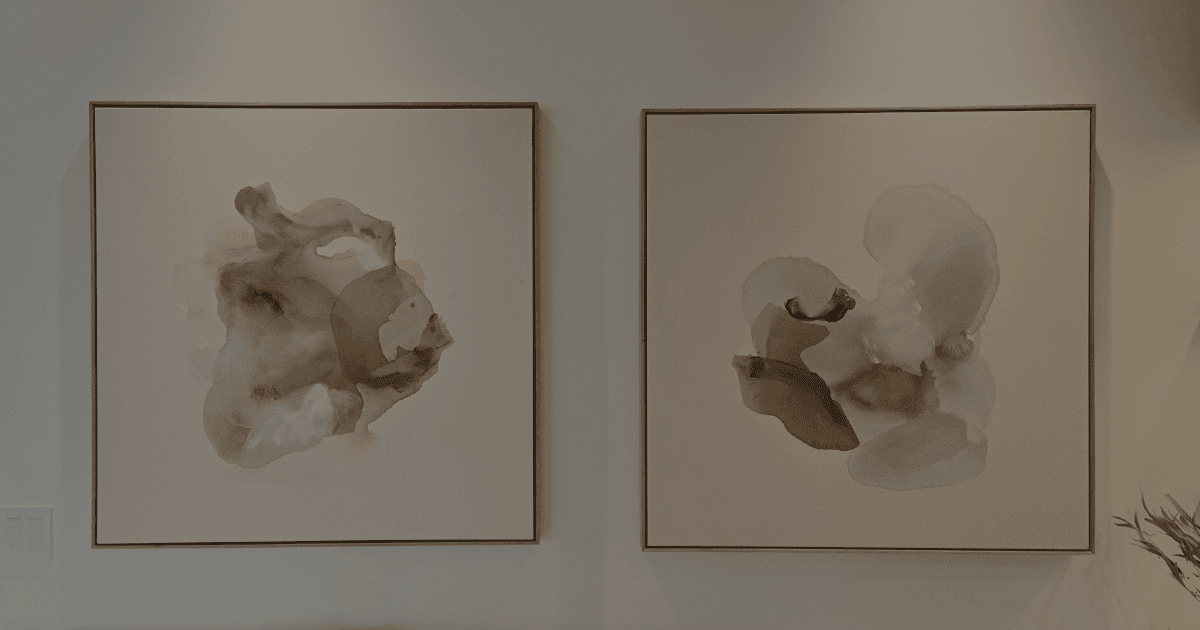
Though not everyone is a painter or artisan, everyone is an artist with a unique view of the world. Art has a remarkable ability to breathe life into a space, reflecting our personalities and evoking emotions. The appreciation of beautiful things is a deeply human and hygge experience.
Art can complete a room or make it feel unfinished. That’s why it’s essential to take your time and consider your preferences, how you want to feel, and the elements of the room where the piece will live.
Let’s explore the art of selecting the perfect original piece, considering scale, colour psychology, art styles, and methods to discover your artistic voice and train your art eye before making that big purchase!
Scale, scale, scale. We can’t stress this one enough. Scale is the top challenge we see in home design. Read more about this in our 5-minute design fundamentals crash course.
A well-proportioned piece can enhance the overall balance and harmony of the space. Conversely, a disproportionate piece or odd grouping will create a choppy and unfinished look. When you spend time curating your collection, you will be dismayed to realize that the scale will not work in your room without some strategic placement.
To determine the ideal scale, follow these steps:
1) Measure your walls: Start by measuring the height and width of the wall where you intend to hang the artwork.
2) Scale proportionally: As a general guideline, aim for the artwork to occupy 2/3 to 3/4 of the available wall space. This allows for a visually pleasing composition without overwhelming the room. Here are some other guidelines for using the scale appropriately.
3) Consider furniture placement: Consider the furniture in the room. Artwork should typically be hung with the centre of the artwork at eye level (60-66" above the finished floor) and relate to the furniture's scale. For example, a large statement piece works well above a sofa, while smaller works can be grouped on a smaller wall over a side table.
4) Factor in how varying sizes and combinations of artworks throughout a space will alter the feel of a space. A series of carefully curated large-scale works on a main floor can create a gallery feel, whereas a combination of medium and smaller works can create a focal point that is more human in scale and will grab and hold attention differently. Smaller items can work well with repetition and strategy.
Colours play a crucial role in setting the mood and atmosphere of a room. Each colour has unique psychological associations that can impact the emotions evoked. Please keep in mind that colour psychology dramatically depends on where you live. Each country and region has slightly different associations with colours.
Here are some common colours and their emotional effects in North America:
a) Blue: Calming, serene, and peaceful. Ideal for bedrooms or spaces where relaxation is key.
b) Red: Energetic, passion
ate, and bold. It can add vibrancy and drama to a room. Red is not ideal for bedrooms or spaces where calm is the goal.
c) Yellow/ Orange: Bright, cheerful, and uplifting. Perfect for spaces where creativity and positivity are encouraged.
d) Green: Refreshing, harmonious, and soothing. It represents nature and creates a sense of balance and tranquillity.
e) Neutral tones: Versatile and timeless, neutral colours like beige, grey, and white provide a calm, quiet backdrop.
What do these colours mean to you? Consider this when you enter a space where these colours are the predominant theme. Pay attention to your body’s reaction. Does it match the above, or is it different? Listen to your body and use the appropriate colours in your home to reflect how you want to feel. Some people find red relaxing, whereas others find it invigorating. You must decide what these colours mean to you.
Art comes in various styles and mediums, each with distinct characteristics and appeal. You don’t need to be an art expert or historian. No one expects you to give a lecture on the use of colour and the style of brush strokes Van Gogh used in Starry Night. You merely need to gain a general idea of what is available and what genres speak to you.
Here's a brief overview of some popular art styles:
a) Modern: Sleek, minimalist, and often abstract, modern art embraces experimentation and unconventional techniques. It leaves a lot for the viewer to draw whatever emotion they desire from it, and often leads to discussions about what the artist intended. It can be in any medium.
b) Traditional: Traditional art depicts realistic scenes, landscapes, and portraits. It is often completed using canvas and paint rather than unconventional materials and techniques.
c) Realism: Focused on capturing detailed and accurate representations of subjects, realism aims to depict the world as it is.
d) Abstract: Non-representational and subjective, abstract art uses shapes, colours, and forms to convey emotions and ideas, allowing for individual interpretation.
e) Graphical/ Graffiti/ Murals: These art styles may be found on the sides of buildings, magazines, or product packaging, but they also find their place in many people’s homes. They can include block letters, social or political commentary and bold colours.
Finding an art style that resonates with you is a deeply personal journey. Though we will offer you some tips here, it’s vital that you listen to your gut instincts on what speaks to you. Here are some ways to identify your artistic preferences:
a) Visit art galleries and museums: Immerse yourself in the art world by visiting exhibitions, galleries, and museums. Observe different styles and pay attention to the ones that catch your eye or evoke an emotional response. Visit multiple times if necessary and pay attention to how the piece makes you feel.
There are many art museums & galleries in Calgary to visit.
Illingworth Kerr Gallery – Found on the AU Arts campus.
The Glenbow Museum is closed during construction, but it still has an art presence at The Edison.
b) Online research: There are incredible resources online. We’ve linked a few throughout this blog. Explore online galleries, follow artists on social media, and read articles to broaden your knowledge and exposure to different art styles.
A word of warning for online browsing: Physically standing in the presence of the work will likely evoke a different feeling than seeing it on the screen. When you find something that piques your interest, try to find a location that has the artwork on display.
c) Experimentation: Be bold and experiment with various art styles and mediums. You may not feel like an artist, but practice might deepen your appreciation for a specific art style. Attend workshops or try your hand at creating your own art. You may notice that your art practice keeps bringing you to a particular brush stroke or shape. Or you might feel drawn to the feeling of clay between your fingers but don’t necessarily appreciate your own works. In other words, you might be terrible! And that’s completely natural. We promise you’ll have fun, and you’ll appreciate artists even more if you find it difficult to do so yourself.
There are plenty of art workshops in Calgary! Here are a few to get you started:
Paint: Paint Nite, Kensington Art Supplies, & Swinton’s
Ceramics: Workshop Studios, Mud Potters & Color Me Mine (pottery wheel classes)
Blown Glass: Okotoks Hot Glass Studio
After you’ve done the above steps and you’ve trained your art eye, here are some tips to make your final purchase.
a) Attend a student art exhibition like the annual Alberta University of the Arts AUArts Grad Show Exhibition. You may find that you love a budding artist’s work and can get in on the ground floor. Art is an investment, and having an early work of an up-and-coming artist could be quite valuable later.
b) Rent before you buy: Places like ArtMatch not only represent Calgary artists, but artists around Canada. They will allow you to rent a piece of art before committing to making a purchase. You can even swap pieces monthly until you find one you like. This is another great way to see how you feel with art in your home.
c) The purchase of original Canadian art created by a Canadian artist may be tax deductible. Read more about the ins and outs of this fact in ArtMatch’s blog here.
d) Galleries to view & purchase art:
Selecting suitable artwork for your room is a personal artistic journey that involves understanding scale, colour psychology, and art styles. Art is in all of us. From the beginning of time, appreciation for beauty and artistic renderings of our surroundings has been a profoundly human experience. It’s the expression of how we experience the world.
Don’t be surprised if embarking on this journey creates a deeper connection to yourself as you curate an atmosphere that resonates with your inner being. So, embrace the art world, and let your home come alive with creativity and self-expression. Contact us if you have questions about creating a cohesive space through furnishings, art, and décor!